What needs attention
Removal may cross the wall of an adjoining room. A visible boundary in one room may leave questions about the concealed shared partition. What finding would extend removal into the adjoining room, and who authorizes that change?
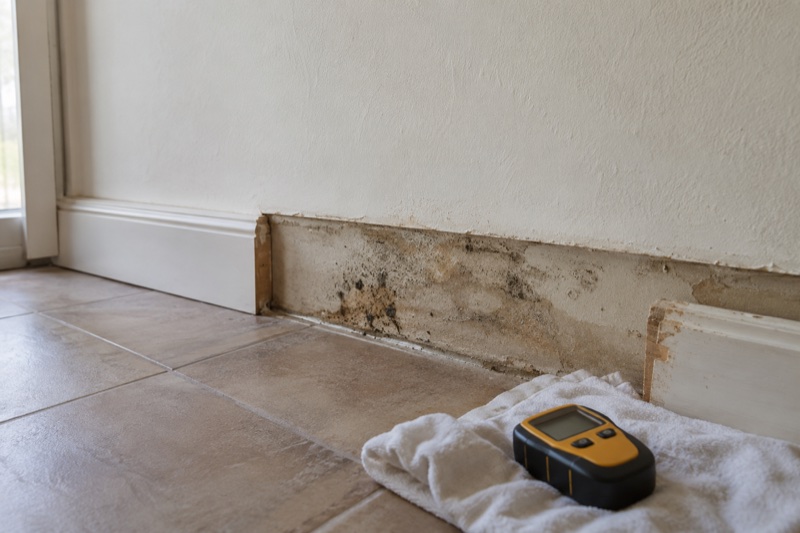
One side of a wall may leave the other side unassessed
An affected surface in one room can raise a question about a shared partition without defining the condition of the adjoining room. State what is visible and what remains concealed. A proposed extension across the wall needs an assessed reason, not simply a symmetrical boundary drawn on both sides.
Agree the trigger for extending removal
Ask which new finding would justify adjoining-room access and who must approve it. The initial scope should name retained finishes as well as material proposed for removal. If access is limited, keep that limitation in the record before rebuilding instead of assuming the hidden layers were examined or resolved.
Access for the affected space
Give the exact property address and identify the affected structure. If several buildings or storage spaces are present, make clear which one needs assessment and who can authorize entry. For material removal, agree the additional-work approval process and name the trade responsible for rebuilding.
Related cleanup information
Golden Gate Estates service area; Mold-damaged material removal; Compare the cleanup scope.
Sources and further reading
Your next step
Talk through your mold concern.
Have the address, affected room and any known water history ready.