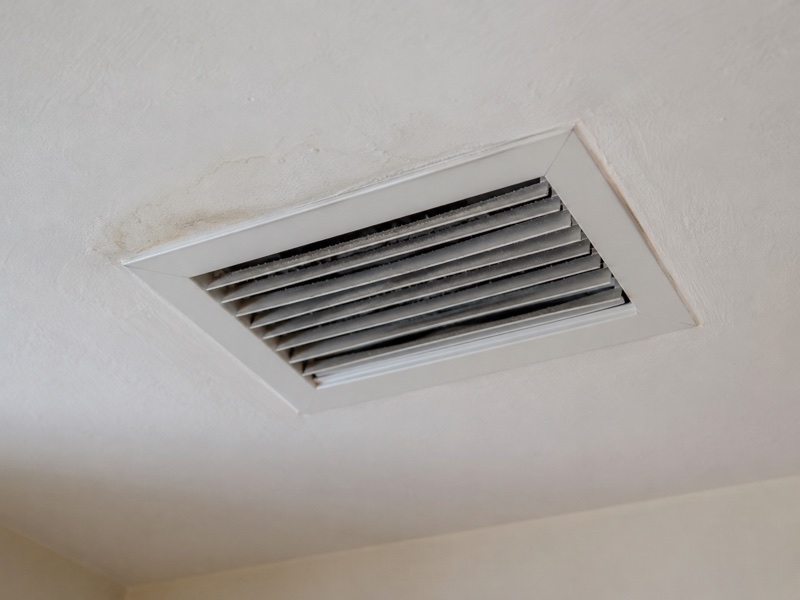
Ask where the claimed growth is located
Distinguish a ceiling or grille surface from the inside of a duct, an air handler component and duct insulation. EPA guidance recommends asking a provider to show the mold they say exists, because parts of a system may not be visible.
A substance that resembles mold may require expert identification and laboratory analysis for confirmation. Ask which observation supports the claim and what uncertainty remains. A sales photograph without a location or an explanation is difficult to use as a scope record.
Duct material changes the recommendation
Hard duct surfaces and insulated duct materials do not have the same cleaning limits. EPA states that wet or moldy insulation in insulated ducts cannot be effectively cleaned and should be removed and replaced.
Ask the proposal to identify the affected components and explain why cleaning or replacement is proposed for each. Confirm whether cooling repairs, drain work, insulation replacement and other mechanical work have a qualified trade responsible for them.
Resolve moisture and system operation first
If you know or suspect the HVAC system is contaminated with mold, EPA advises against operating it because it could spread mold through the building. Ask an appropriate professional about the system condition before using circulation as a drying strategy.
Ask what caused the moisture and what correction is required. Cleaning a grille without addressing an identified wet component, drain or insulation problem does not explain how recurrence will be prevented. Do not apply chemicals into the system on your own.
Review the limits of any proposed result
A useful record identifies the inspected and uninspected sections, materials treated or replaced, and any unresolved moisture conditions. Ask how completion will be checked and which findings would require another visit.
For an odor without a demonstrated system source, read the assessment guide before authorizing duct work. For a stain that is on drywall around a register, the residential cleanup and moisture-source guides help separate wall findings from system findings.
Name the actual system surface
| Location or material | Evidence to ask for | Scope question |
|---|---|---|
| Grille and nearby plaster | The exact marked surface | Is this a room-surface concern or a system-component finding? |
| Hard duct surface | The inspected location and demonstrated finding | Which sections were assessed and which remain inaccessible? |
| Wet or moldy duct insulation | The actual material and its condition | EPA identifies different cleaning limits for affected insulation. |
Related services and decisions
Sources and further reading
Your next step
Talk through your mold concern.
Have the address, affected room and any known water history ready.