What needs attention
A wall mark lies beside a shared service cavity. The location is useful, but does not establish which party is responsible for a source. What evidence supports an investigation of the shared cavity and who grants that access?
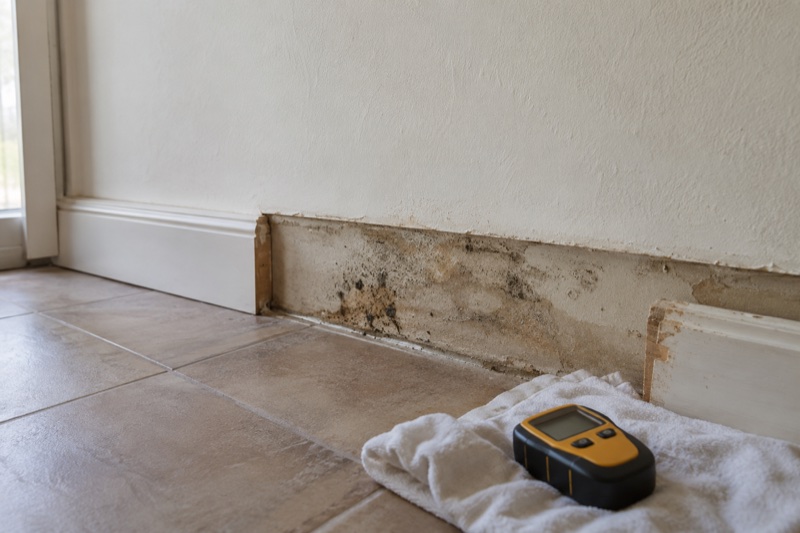
A shared cavity is a possible source location
A wall mark beside a service cavity provides useful context without identifying the responsible system or party. Supply available building records and dates of the observed changes. Avoid opening the cavity to assign ownership; moisture evidence and the permission to investigate shared components are separate parts of the inquiry.
Ask what supports shared-space access
The assessment should explain which finding makes the cavity relevant and what remains possible elsewhere. Identify who can authorize that investigation and any additional source work. A report should preserve the unresolved boundary if access is unavailable, rather than turning a nearby shared service into a confirmed cause.
Access for the affected space
For a leased or shared property, clarify authority over individual finishes and common components before opening an affected area. Keep the owner, resident and management contacts distinct. For an investigation, provide existing source-repair records and explain which concealed area can be accessed with permission.
Related cleanup information
The Moorings service area; Moisture source identification; Compare the cleanup scope.
Sources and further reading
Your next step
Talk through your mold concern.
Have the address, affected room and any known water history ready.