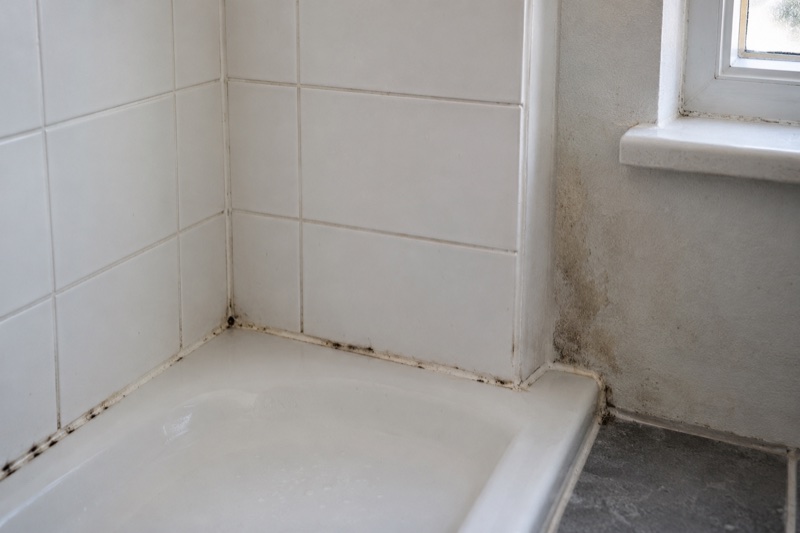
Describe the rooms individually
A shower seam, a soft wall and a musty cupboard are different findings. List each affected room and material rather than describing the whole residence as contaminated. Existing dated photographs and reports can help establish what was observed.
A photo cannot identify a mold species, demonstrate a health effect or reveal every concealed surface. Keep a suspected cause separate from a confirmed leak repair. The assessment should explain what is known and what needs investigation.
Set permissions and occupancy questions early
For a rental, inform the owner or manager of the water problem and determine who can authorize entry and changes. In a shared building, identify any roof, wall or cooling component outside the individual residence’s authority.
Ask whether the proposed work affects an occupied bedroom, a bathroom needed daily or the only route through the home. Establish the work boundary and any occupancy advice with the responsible professional before making a household plan.
Review retained and removed materials
EPA guidance distinguishes cleanable hard surfaces from porous materials that may be difficult to clean completely. Ask which finishes, cabinets, insulation and contents will be retained, treated, removed or referred to a specialist.
Do not paint or caulk over growth as a substitute for cleanup. Ask how the dampness was corrected and what records support closing a cavity or restoring finishes. A new surface is not documentation of the concealed work.
Keep the handoffs explicit
Agree responsibility for source repair, contents handling, disposal and rebuilding. Ask which parts are included in the written amount and how a new finding would change the scope.
Use the written-scope guide for a comparison checklist, and the Florida credential guide to verify the responsible professional. Confirm address-specific availability and appointment details during the call.
Match the surface to the next question
| Affected part | What to establish | Before agreeing to work |
|---|---|---|
| Bathroom tile or seam | The exact surface and recurrence pattern | Clarify whether adjoining drywall or cabinetry is also affected. |
| Wall or ceiling | Current dampness, known water history and access limits | Separate any opening from the restoration of removed finishes. |
| Closet or stored contents | Items directly affected and items merely nearby | Keep contents decisions separate from the room boundary. |
Related services and decisions
Sources and further reading
Your next step
Talk through your mold concern.
Have the address, affected room and any known water history ready.